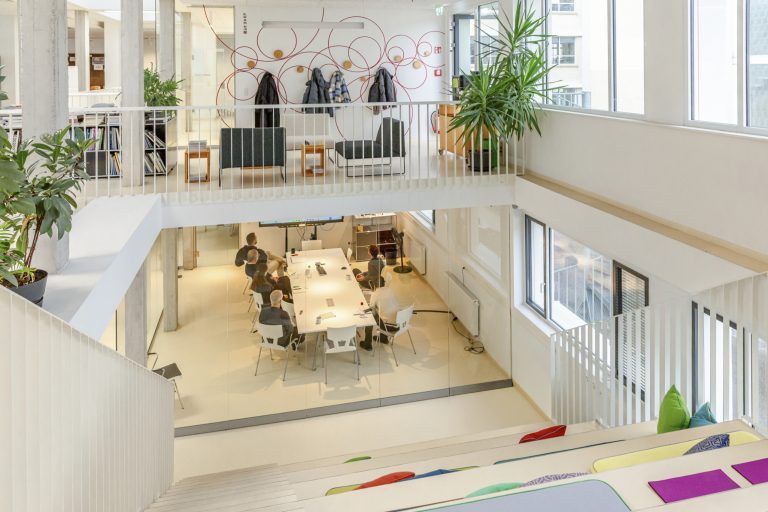
At hammeskrause architekten, we’ve been working with a model-based approach for over a decade. We haven’t just applied the openBIM standards—we’ve actively helped develop them. That’s why we’re no longer talking about technical challenges here, but rather about what makes this way of working possible.
The Max Planck Society’s Cyber Valley project illustrates this very clearly: a complex research environment with high demands on flexibility, technology, and usage. This is exactly the kind of project that determines whether BIM truly adds value.
We consistently use openBIM because open standards are the only sensible foundation for genuine collaboration. Every designer can use the tool with which they work most efficiently. How the results are integrated is a solvable issue of data standardization: IFC, BCF, IDS, and other formats are standardized by buildingSMART. There’s no requirement to use uniform software, and no waste of resources due to parallel tool environments. In practice, this means that all stakeholders work within the same model. Decisions become visible early on. Conflicts are resolved before they arise on the construction site. Changes remain manageable because their implications are immediately clear.
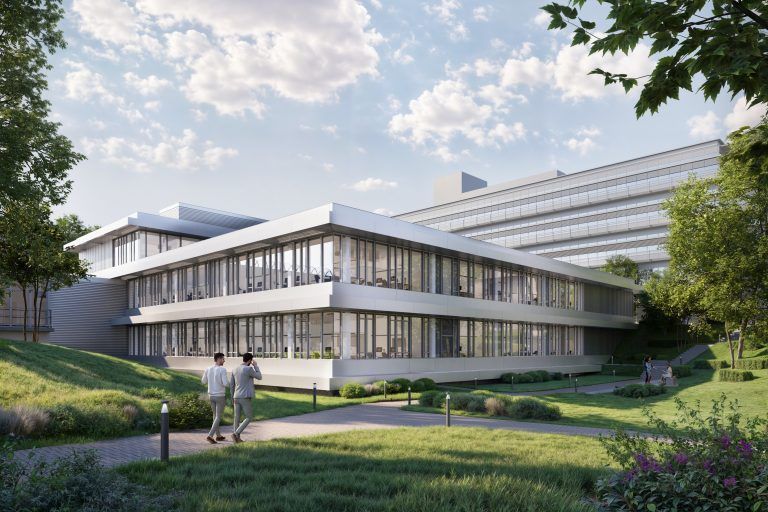
At Cyber Valley, it becomes clear what this means in practice. Research is evolving rapidly, requirements are changing, and spaces must be able to adapt. The digital model captures this dynamic without sacrificing precision. Variations are part of the process. Decisions are based on data, not assumptions. This has direct implications: planning becomes more reliable. Deadlines become more robust. Costs remain transparent.
BIM is not an end in itself, it serves architecture. Creating buildings that function over the long term, can be adapted, and use resources responsibly. Sustainability isn’t achieved through additional systems, but through precise planning and smart decisions from the very beginning.
This video offers a glimpse into our day-to-day work. No promises—just real-life practice.